


Pool Fence Requirements Explained - Key Safety Zones, Dimensions and Common Site Checks
 Dec 31, 2025|
 View:330
Pool fences are among the most strictly inspected safety elements in Australian residential projects. Unlike other boundary systems, their primary purpose is not to define space, but to restrict unsupervised child access to the pool area.
This article summarises the key dimensions and safety concepts most commonly checked on site, helping homeowners, builders and designers better understand how pool fence requirements are applied in practice.
What is a pool fence designed to prevent?
A pool fence is designed to delay or prevent young children from accessing the pool area without supervision.
As a result, requirements focus on climb resistance, controlled openings and secure gates, rther than on fall protection alone.
Pool fence height: the number most people remember
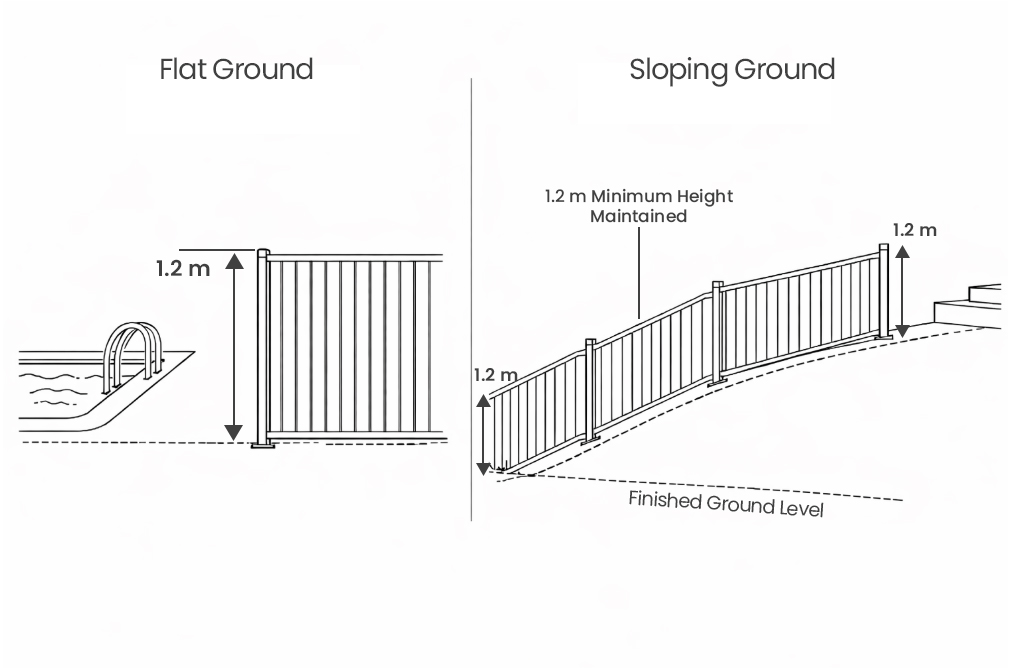
For most residential swimming pools, the minimum fence height commonly referenced is 1.2 metres, measured from the finished ground level on the outside of the pool area.
On sloping or stepped ground, special attention is required to ensure the minimum height is maintained along the entire fence line.
Gaps and spacing: the “100 mm rule”
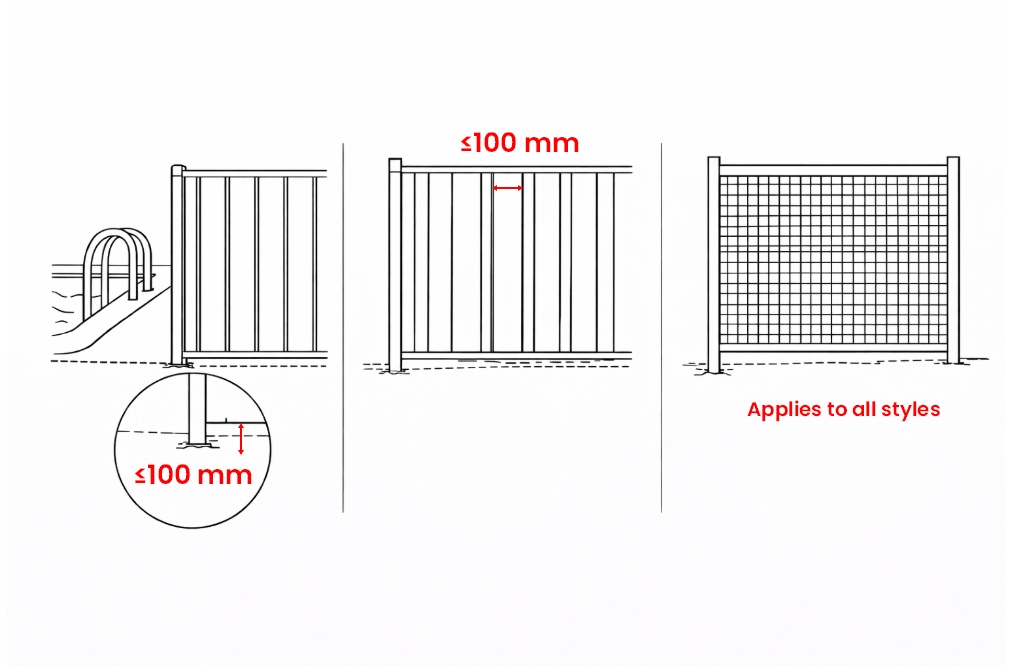
To reduce the risk of children squeezing through or climbing, pool fence openings are tightly controlled.
In practice, common checks include:
· Gaps at the bottom of the fence not exceeding 100 mm
· Gaps between vertical members not exceeding 100 mm
These limits apply regardless of whether the fence is constructed from vertical bars, panels or infill systems.
The Non-Climbable Zone (NCZ): the most critical concept
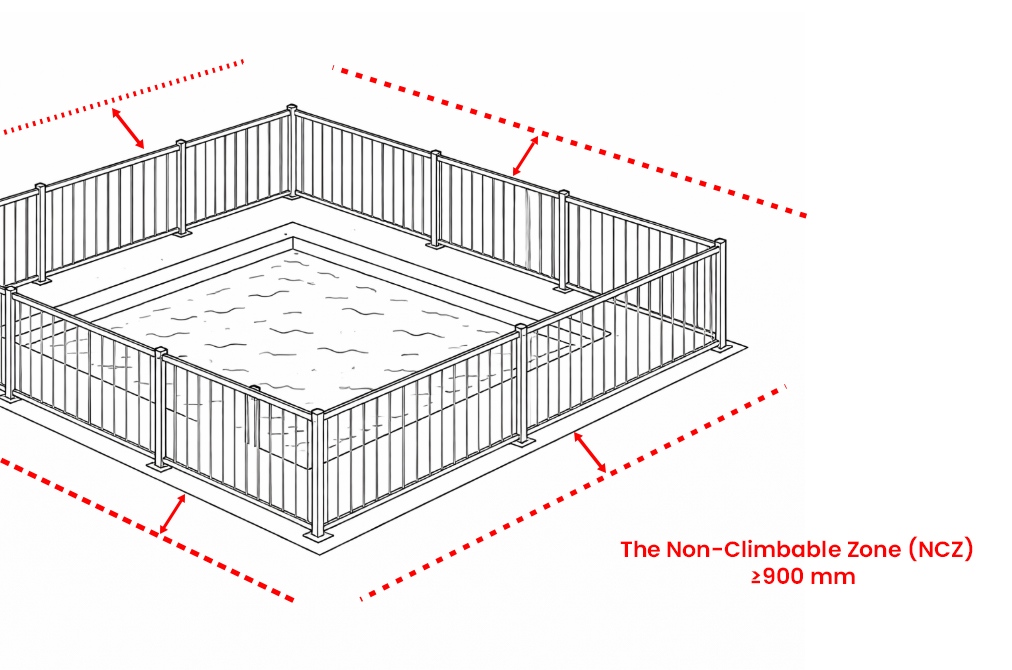
One of the most important pool fence requirements is the Non-Climbable Zone (NCZ).
This zone, typically extending 900 mm around the fence, must be kept free of any features that could provide a foothold or handhold for climbing.
Horizontal members, nearby structures, furniture or landscaping elements within this zone often trigger non-compliance.
Gates: where most pool fence failures occur
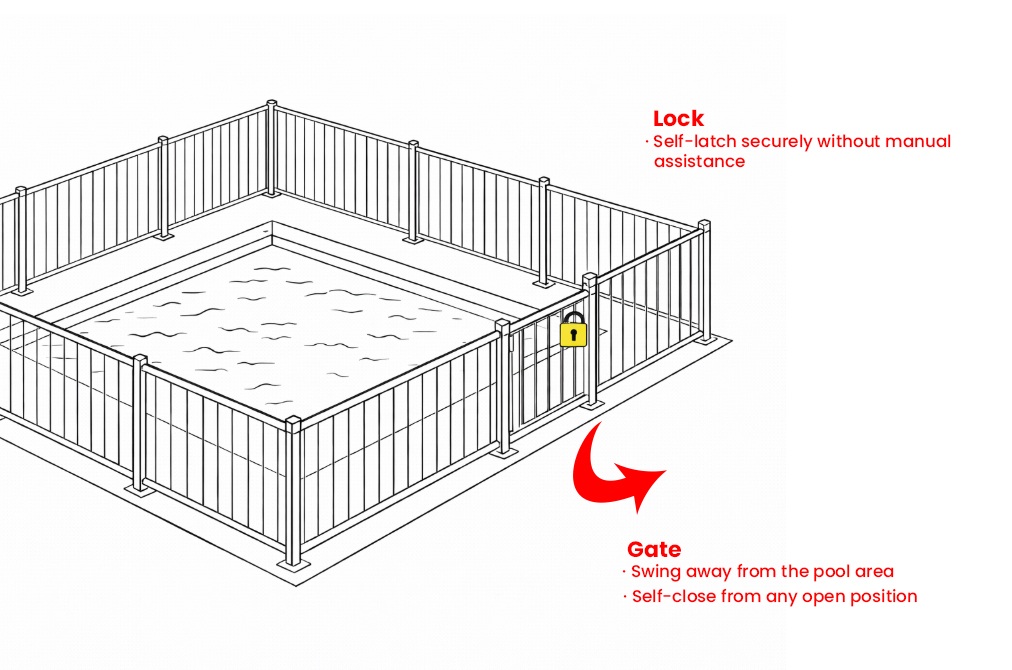
Pool gates are frequently the weakest point in an otherwise compliant fence system.
In most residential inspections, gates are expected to:
· Swing away from the pool area
· Self-close from any open position
· Self-latch securely without manual assistance
Gate performance is often tested on site, not just visually assessed.
Important notice
This article provides general guidance only. Final compliance must be confirmed against the applicable State or Territory pool safety regulations and your certifier’s advice.